A blog which may appeal to those who enjoy stories about people, politics, economics, sports, and travel. In and around Argentina and the USA.

7/04/2008

Book Review: Thirteen Moons

Charles Frazier's Thirteen Moons is an effort that unfortunately fails to live up to the standard he set with his outstanding debut novel, Cold Mountain. In Thirteen Moons, Frazier returns to the mountains of western North Carolina to tell the story of Will Cooper, a leader of men modeled on the historical figure William Holland Thomas. Thirteen Moons does have compelling descriptions of Indian culture and the undisturbed American wilderness. And while early chapters are filled with many captivating adventures like Will's initial journey to his new post as a 12 year old, Thirteen Moons largely disappoints. I found the writing hard to swallow and didn't end up attached in any way to the story of Will and Claire. The slave-holding Indians, Bear and Featherstone, are also mostly unsatisfying. And the cranky old narrator who opens and closes the book is just plain depressing. This time around Frazier seems to have lost his own voice and replaced it with a odd mix of McCarthy and McMurtry. I found myself struggling along, all the while missing the wonderful prose, characters and emotion of Cold Mountain.

Thirteen Moons is the story of the amazing life of William Cooper, a man who becomes a white chief of the Cherokees, a state senator, and a confederate colonel. He also overcomes a 6th grade education to become a self-taught lawyer and well-read linguist who teaches himself Cherokee and French. On the business side, Will pulls a double Algeresque rags-to-riches-to-rags- to-riches story thanks to investments in land, mercantile and railroads. And as a bonus, his and Bear's acquisition of hundreds of thousands of acres of tribal homeland allow their people to avoid removal to western reservations. Will travels extensively and meets the rich and famous, but never forgets Claire, the beautiful young girl who somehow belongs to his rival Feather- stone. Near the end of his amazing life and deteriorating mentally, Cooper enjoys passing time by firing a shotgun at his own trains as they roll through his front yard.

Will Cooper shares more than "some DNA" with William Holland Thomas, a 19th century Cherokee chief and Confederate officer. Both Wills are sent to work as trading post clerks in Indian territory, both are adopted by the local chief, and both are given law books in lieu of pay. Cooper and Thomas are both connected to President Taylor and both go to Washington to fight for the rights of their tribe. In the Civil War, both lead their legions in tricky maneuvers against union forces occupying a town in western North Carolina. Upon demanding surrender, both learn that the war had ended a month earlier at Appomattox. Each of them survive smallpox epidemics that devastate their people but end up suffering from what may have been Alzheimer's disease. The real William Holland Thomas, who led the Thomas Legion of Cherokee Indians and Highlanders, spent 20 years living in and out of mental hospitals and died in debt. While he is a very interesting character whose story deserves to be told, this project would have been better off in the hands of another writer. Frazier had much more success when working exclusively from his own imagination.

Some may say that the instant fame Charles Frazier achieved with Cold Mountain was a little too much to handle: they will point to the big award, movie, and advance for this second book. His fans will respond that there is a lot of jealousy out there, and that may well be true. I know a few people who would love to write a book like Cold Mountain and have friends over to watch Nicole Kidman star in the movie version.

4/14/2008

Argentina: Hot Destination

Travelers, writers, tango dancers and students are all pouring into Argentina thanks to low prices and world class everything. This is a country that has some of the greatest waterfalls, mountains, glaciers, lakes, fly fishing, horseback riding, trekking, (southern hemisphere) skiing, polo, futbol, steaks, wines, handbags and shoes in the world. And since beautiful people lie on nearby Uruguayan beaches, it all adds up to a great place to visit. That's why people are probably telling you to book your vacation - or better yet - plan your long term stay now. In Buenos Aires new boutique hotels are opening every week and hundreds of apartments are available for short term rental. The regional airport, Aeroparque, is right in town so it's easy to find flights to the tropical jungle setting of Iguazu Falls or the Andean valley vineyards of Mendoza. Those with more time will continue on to unforgettable Patagonian adventures. Think you saw it all last time? You probably still need to check out Cordoba, Salta or Entre Rios. Your friends told you how great it is and now I've done the same, so get yourself on down to Argentina.

3/20/2008

Portrait Miniatures at the Museo Nacional de Arte Decorativo

In the late 19th and early 20th century Argentina was one of the world's wealthiest nations and the Alvear family was at the pinnacle of belle Buenos Aires society. In 1897 Josefina de Alvear, a niece of the city's first mayor and a cousin of President Marcelo T. Alvear, married Matias Erraturiz at the Cathedral of Buenos Aires. After many years in Europe, the family returned in 1917 and moved into their spectacular new palace on Avenida Libertador. Their French architect, Rene Sergent, designed a total of 15 projects for Argentine clients of which 5 were completed. One of the others is the former home of Josephina's sister, the Bosch-Alvear Palace, now the American Embassy residence.

While in Europe the Erraturiz-Alvears undoubtedly visited Auguste Rodin's own exhibit at the Parisian World's Fair. They later commissioned a massive fireplace from him that was never completed. A small model signed by Rodin can be viewed at the mansion which opened its doors as the Museo Nacional de Arte Decorativo in 1937. The museum features paintings and sculpture from the family's collection by El Greco, Corot, Delacroix, Fragonard and Manet. But the palacio itself is the star of the show and will be truly appreciated by those who enjoy spectacular homes from days gone by. Sergent's concept was a revival of the French neoclassical style of the 18th century and many rooms were inspired by landmark buildings in France: for example the ballroom after the Hotel Soubise and the dinning room after the Petit Trianon in Versailles. Two exceptions are the renaissance Great Hall which was designed to feature the family's existing collection of tapestries, and an excellent neobaroque sitting room by the Catalan artist Jose Maria Sert. The Sert chamber was commissioned at the request of Matias (Mato) E. Alvear, the couple's only son.

Current visitors will enjoy a bonus treat: a spectacular collection of portrait miniatures (the forerunner of the wallet photograph) now on display in the family living room. The collection includes numerous 18th century watercolor on ivory works by well known artists who specialized in miniatures. Most are framed in gold pendants and many are pocket masterpieces. Among the sitters are English, French and Russian nobility including numerous children. A very tiny painting of Nicolas V of Russia is set in a diamond encrusted ring. I enjoyed looking at all those little faces from another time and place. While some of the miniatures served political purposes and were mass-produced, others were one-of-a-kind treasures kept close to the heart on long journeys across an ocean.

3/19/2008

Biblioteca Nacional de la Republica Argentina


Hulking hideously over a leafy section of Recoleta is the brutalist Biblioteca Nacional de la Republica Argentina. This raw concrete monster recalls what went wrong in cities and on campuses across North America and the UK during the construction boom of the 1960s. This Buenos Aires project was announced in 1960 - just as municipalities and universities up north were starting to throw up inexpensive slabs of this type. In the 80s, Prince Charles became the most famous critic of the architecture and by the time Argentina's new National Library finally opened its doors in 1993, many of its unpopular siblings in England, Canada and the USA had been demolished.

The library's block-like unfriendliness punishes innocent citizens who happen to look up as they walk by. The top heavy structure, resembling an obsolete offshore oil rig, sits on the site of a house the Perons lived in until Evita's death in 1952. Down the slope on Libertador a statue shows her fleeing the scene, as if afraid the Biblioteca will topple over on her head.

The National Library suffers from problems that are apparently common in brutalist buildings. For example the harsh concrete facade has aged poorly and attracted graffiti. And careless maintenance doesn't help matters. A few letters have fallen off the sign above the hard-to-find entrance, and national flags decorating the broken-tile plaza are faded and dirty. A common garden hose and plastic kitchen pail are visible in the bushes. Celebrating only it's 15th anniversary, the library looks easily three times as old.

Inside I found only one working elevator and a surprisingly small amount of public space. Also missing were any noticeable books. The few students in residence were, however, enjoying absolute silence and spectacular views.

A quote from a wikipedia summarizes quite nicely what was terribly wrong with the decision to build this library in this location: "Brutalism...is criticized as disregarding the social, historic, and architectural environment of its surroundings, making the introduction of such structures in existing developed areas appear starkly out of place and alien." The Biblioteca Nacional is unfortunately a spectacular example of this type of incongruous mismatch.

1/13/2008

The Brazilian Miracle

Americans have been slow to notice a major developing nation in their own backyard. We all know what's going on in China and India, but how many think of Brazil as a major economic force?

Colin Powell called Brazil an "agricultural superpower" and the country could soon overtake the United States as the world's largest exporter of foodstuffs. Author Michael Reid says that if China is the world's workshop and India its back office, Brazil is it's farm. Roger Cohen points out that Brazil is already the world's largest exporter of commodities such as coffee, beef, sugar and orange juice.

Brazil's cerrado is the endless savannah which was written off for centuries as useless, but is now being brought online thanks to advancements made by the Brazil science agency Embrapa. Embrapa found that the cerrado's soils could be made fertile with an optimal mixture of phosphorous and lime. And Brazil has developed 40 tropical varieties of soybean for the region. Brazil also produces cotton and is now turning its attention to wheat. Embrapa is recognized globally for the importance of it's work, which can be applied to countries in Africa with this type of terrain.

But food is not the whole story. Brazil is a big player in two other product categories the world wants most: natural resources and energy. Two years ago Brazil achieved its goal of energy self-sufficiency. An now Brazil has surplus "oil, gas, biomass and hydro power" all which it will need to manage and develop carefully going forward. If it's successful, it will couple its ethanol program with the recent discovery of an immense deep-ocean oil field to turn itself into a very significant energy exporter for the future.

Brazil is actually already a world leader in biofuel. Brazil makes ethanol from sugar cane which generates eight times more energy per hectare than corn. As far back as 2005, more than 50% of the cars sold domestically were "flex-fuel" - capable of running on any combination of ethanol and gasoline.

1/10/2008

Where will George W Bush be Ranked

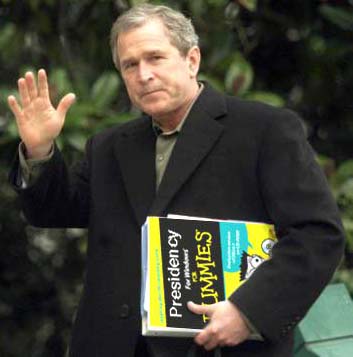
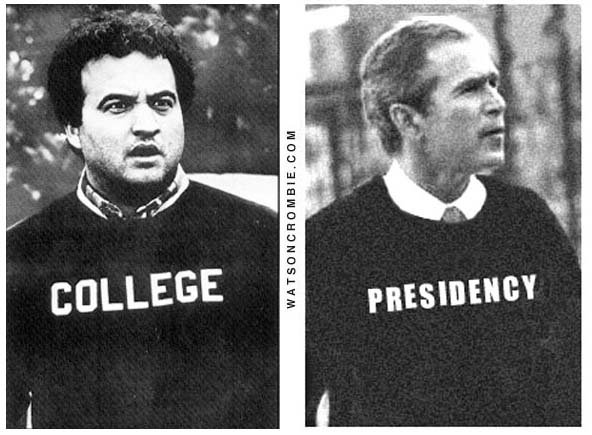
When George W Bush finally retires to the ranch, he will end up near the top of at least one list of United States Presidents. At the end of his second term, he will end up tied for 2nd with 2922 days served in office.

Joining him in second place are the prior presidents who also served two full terms: Jefferson, Madison, Monroe, Jackson, Grant, Cleveland, Wilson, Eisenhower, Reagan and Clinton. FDR served 3+ terms and is easily #1 all time with 4,422 days served. George Washington also served two terms but his inauguration was postponed and he ended up spending 2,865 days as the new nation's leader. Four Vice Presidents, Truman, Teddy Roosevelt, Coolidge and Lyndon Johnson, took over upon the death of their bosses and were subsequently reelected as the top man. This quartet served between 1800 to 2800 days. Richard Nixon managed 2027 before resigning.

Of the presidents named here, many are also ranked in the top 10 for presidential achievement and leadership qualities. At the other end of the table are those whose failures and faults got them in trouble. Coolidge, Grant and Nixon are three that fit this category. With about 13 months to go before inauguration day on January 20, 2009, it's time to start thinking about which of these groups George W Bush will join.

In a Quinnipac University poll of voters conducted in May 2006, Bush was named far and away the worst of the eleven chief executives since WWII. And in a Rasmussen Report poll taken in June 2007, only two presidents were viewed unfavorably by at least 50% of respondents: Nixon and George W. Bush.

If historians rank Bush below Nixon, which seems likely, he will find himself knocking on the door of the bottom ten. The current basement dwellers are (counting down): James Garfield, Zachary Taylor, John Tyler, Millard Fillmore, Ulysses Grant, William Henry Harrison, Andrew Johnson, Franklin Pierce, James Buchanan, and Warren G Harding. Behavioral and ethical problems such as corruption, laziness and drinking are a common feature here.

The man on the bubble is James A. Garfield. Poor Garfield served only 199 days and 80 of these on his death bed following an assassination attempt. In happier times Garfield could simultaneously write Latin with one hand and Greek with the other. It's also notable that Johnny Cash wrote a song about him and Clint Eastwood mentioned him in a movie. So yes, Garfield moves up and Bush locks up a spot in the bottom ten.

The only question remaining is: how far down the list does he fall ? In 2006 historians voted Buchanan's failure to deal with secession the worst presidential mistake ever made. Has that blunder been replaced by the 2003 invasion of Iraq? If so, Bush could join Buchanan and Harding as one of the worst three presidents of all time.

No matter where he ends up historically, George W is guaranteed a memorial in one of his least favorite place on earth: Northern California. San Francisco has the unusual but proud tradition of naming streets after terrible presidents. Always ahead of the game, the city already has a Bush Street up and running. Long after George departs, liberals will be strolling down Fillmore, Taylor, Buchanan, Pierce, Harrison, Grant and Bush. For those keeping score, Warren G. Harding died at the Palace Hotel and has a golf course in San Francisco named after him. John Tyler and Andrew Johnson were unfortunately never honored in the city on the hill. I don't know how Johnson missed out, but Tyler may have been penalized for annexing the Republic of Texas and subsequently admitting Florida as a state in 1845.

9/15/2007

Buenos Aires Barrios: Las Cañitas

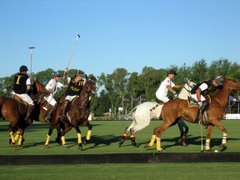
Las Cañitas is a peaceful 5 square block neighborhood hidden between the polo fields and a commuter rail which parallels Avenida Dorrego. While tourists swarm Recoleta, Palermo, Puerto Madero and San Telmo, porteños fill the restaurants here almost every night of the week. The parrillas: Las Cholas, El Primo and Campo Bravo are among the most popular in the city. If you can pull it off, book a trip to Buenos Aires in early December and head to Las Cañitas on the 8th for the big polo finals. Call now to book a room in one of three new boutique hotels in the neighborhood (listed below).

Otherwise go any night of the week for dinner at one of the numerous restaurants centered around Baez and Arévalo. Afterwards you can enjoy a drink at Soul Cafe, a super funky cool bar/restaurant was one of the first establishments to open here. Watch for people that look like actors, models, rock stars and athletes. (Whether they actually are or not is beside the point). Or if Soul Cafe is too crowded, try Von Koning which is a shrine to princess Maxima of Holland (an Argentine). Check out the small patio upstairs. Homesick sports fans can catch a game and drink beer at Drink Gallery.

And anytime you have an extra afternoon in town, stop by Las Cañitas for a stroll on Boulevard Chenaut and a little shopping on Arguibel where Etiqueta Negra, Rapsodia and a handful of others brands maintain little known outlets. Complete the visit at one of the lunch spots listed below.

RESTAURANTS

Most popular parillas
Las Cholas (A), Campo Bravo (B), El Primo(B), Liborio(B)
Other parillas also with sidewalk tables
La Fonda del Polo(A), La Lunera(B), La Ochava(B), El Estanciero(B)
Neighborhood family style parillas
El Portugese(O&G), La Bagual(O&G), La Espuela(A)
Argentine/Italian Restaurants
Novecento(B), Arguibel(Argu), Eh! Santino (B), De la Ostia(B), Baez(B), Campo dei Fiori(A), Deniro(B), Las Cortaderas(B), Chenaut 1878(C)
Sushi
Mikado(Arev), Bokoto(H), Sushi Night Cocina Fusion(B), Itamae(Argu), Sushi Club(B)
Pizza
Morelia(B), Romario(O&G), Tonno(A)
Party Crowd
Soul Cafe(B), Kandi(B), Jackie O(B), Beat House(B)
Lunch
El Clasico(B),Piegari Piazza(B), Las Cortaderas(B),Bondesee(O&G)
Bars
Von Koning (B), Blonda (O&G),Drink Gallery (A), Super Soul(B)

SPORTING EVENTS

El Campeonato Argentino Abierto de Polo

Where the best polo in the world is played. Runs from November 17 through the big final on December 8th. La Dolfina, led by Adolfo Cambiasso, won in 2006, 2005 and 2002. Go with friends and mingle with the glamorous crowd. Then walk over to Baez for evening festivities.
Hipodromo de Palermo
Across Libertador is this huge 1.5 mile race track. Go to admire thoroughbreds close up, place a few bets, and enjoy the afternoon sun. Races are held on Monday afternoons and various Fridays, Saturdays and Sundays. January through September. http://www.palermo.com.ar/

BOUTIQUE HOTELS
248 Finisterra(B), Casa Las Cañitas(H) and Tailor Made Hotel(A)

Key: A: Arce, Argu: Arguibel, Arev: Arevalo, B: Baez, C: Chenaut, H: Huergo, O&G: Ortega y Gasset

9/09/2007

Date with crisis: Part I The Economy


Is Argentina on the road to redemption or the highway to hell? President Nestor "the Penguin" Kirchner received accolades for his leadership following the 2001 crisis, but a four year period of growth masks severe problems his wife Cristina will inherit as the next head of state. The economy's building blocks are like the ubiquitous hollow bricks of Buenos Aires' frantic construction boom. But Argentina's economic infrastructure is little more than a house of cards.

On Thursday, the government reported an inflation rate of just .6% for the month of August, but some analysts say the real level may be more than twice that (meaning an annual rate of 15%). Official figures have been coming in low since January, when President Kirchner replaced key officials at the national statistics agency INDEC (now disparagingly called INDEK by some). Quoting the Financial Times, "economic growth of more than 8 per cent since the 2002 crisis, booming demand fueled by cheap utilities, and industrial capacity that is stretched to the limit, has proved a triple whammy for prices."

Election day is Oct 24th, and Cristina K is the clear front runner against an impotent opposition, but that hasn't stopped hubby from doling out over $1,000,000,000 in classic "happy October" populist handouts in the form of tax rebates, pension and salary increases, and family benefits. The free lunch party may help to maintain economic growth, but is also likely to accelerate inflation. Cristina claims that "political and financial interests" have sought to inflate inflation (numbers). But voters can see exactly how much less their paychecks buy when they set up to checkout counters at supermarkets like Jumbo and Disco. Unfortunately, when it comes time to step up to the ballot box, there won't be any charismatic rival to vote for. The "financial interests" the future president speaks of are the very legitimate holders of inflation-indexed bonds which were introduced when the country restructured its defaulted debt in 2005. If inflation really is 15% the government is underpaying by billions of dollars per year.

Prices are rising rapidly despite government subsidies and price controls achieved by means of strong arm pressure tactics on industry. And price increases are fueling wage demands which are constant. The government has boxed itself into a conundrum that could eventually lead to stagflation - a period of out-of-control inflation combined with very slow, or no, output growth. The president must reduce spending to tame inflation, but that could hurt demand and increase unemployment. (Cristina, who is known to have little interest in economics, has signaled that she will reduce spending and increase the surplus).

In neo-classical economic theory, stagflation "is rooted in the failure of the overall market to allocate goods and services efficiently." And that failure can be caused by excessive government regulation (price controls). In Argentina, changes in monetary policy and deregulation are needed to allow supply and demand to do its thing in a free market. Unfortunately the Kirchner government has shown no capacity to change the way it does business. It's central-planning style has done serious damage to the free market system and chased away much needed investment.

The government's price control bad cop, Guillermo Moreno, is the man in charge of clumsy price negotiation (coercion) efforts. In the case of beef, the government cut off exports in an attempt to force down prices on the local market. Moreno is now in legal hot water for a side project - the infamous new and improved INDEC numbers - and his fate is unknown for now. If a case like his gets to the supreme court, the K's have little to fear since the judges are in their pocket.

President Kirchner feels that he won a big victory for Argentina against the IMF, and that US puppet organization did deserve, and did take, part of the blame for the crisis of 2001. But the government is now trying to borrow $10 billion from the World and Inter-American Development Banks, and a group called the American Task Force Argentina, which represents holders of $20 billion in defaulted debt, is working hard to block the loan. These bond holders sat out a 2005 restructuring in which Argentina paid just 30 cents on the dollar. Argentina also "faces more than 100 lawsuits in the US alone and further legal action in Europe, preventing it from tapping international capital markets for fear of assets issued being seized." The country has been able to avoid that threat thanks in part to investments made by Hugo Chavez.

Cristina is walking into a real mess and when things go from bad to worse it will be impossible for her to blame the prior president. (Hillary is in a better spot in that regard). Cristina will have to take the heat on her own, although Nestor, who may have failed to mention problems x, y or z, will be spending a lot of nights sleeping on the couch.

Argentina has another date with crisis unless major changes are made now.

9/08/2007

Date with crisis: Part II Energy

I doubt President Kirchner has ever won a game of chess. That would require him to see one or two moves ahead. Didn't he know that price controls in the energy sector would lead directly to shortages by fuelling rampant demand and discouraging investment that might have helped increase supply? Couldn't he see that the overheated economic activity in other sectors would spark inflation and thereby sabotage his original simplistic goal, which was low prices for voters? So by forcing down energy prices, he made all the other ones go up. What's really scary is that Cristina Kirchner is known to have much less interest in economics than her husband.

Exxon/Mobil, the world's largest oil company has been doing business in Argentina for over 100 years, but the company is now trying to sell it's assets and exit the country. The simple reason is that the Kirchner government has made it impossible for it to do business here. And after 2 1/2 years of clashes with the government took a turn for the worse last week, Royal Dutch/Shell must be thinking hard about its future here as well.

In the wake of the recent winter energy crisis, Shell was hit with hefty fines and a lawsuit against it's boss for allegedly undersupplying the market. Then last week the government arbitrarily ordered the closing of Shell's Dock Sud oil refinery on trumped up charges of excessive pollution and misuse of water. The refinery has an environmental management system that is ISO 14001 compliant and uses "black" water from the highly polluted Riachuelo river for refrigeration before returning it to the River Plate in a much cleaner condition, a spokesman said. In ordering the closing, inspectors also sited "stains and spills" and improper storage of waste rags.

Why would Kirchner want to shut down an oil refinery in the middle of a touch-and-go energy situation? Is he small-minded enough to carry on a petty school yard grudge without any regard for the consequences? Is Shell simply his scapegoat for the crisis, not to mention a convenient new villain for electioneering? Is Hugo Chavez Nestor's master?

When the first wave of an energy crisis hit this winter the government found itself unable to meet nearly half of all demand for gas on peak days. The first thing the President did was blame the weather. But everyone else in the schoolyard knows that cold days come in winter just as hot ones come in summer. Anyway, Kirchner soon remembered that a big bad corporation makes a better scapegoat than mother nature, and so turned his attention back to a favorite enemy, the Royal Dutch/Shell corporation and it's chief Juan Jose Aranguren.

Thanks to price controls, a megawatt hour of electricity in Argentina sells for $25 compared to $73 in Chile. Consumers continue to pay very little for gas even though the government was forced to increase spending on expensive imports and subsidies. Blackouts this winter did not hit voting customers directly. Factories were forced to shut down from 4pm to 10pm on critical days. Consumers will be protected through the election, but will scream bloody murder if and when prices increase at the pumps and blackouts hit home next year.

More than half of the country's electricity comes from gas and oil fired generators. While more reliable than hydro, wind, or solar. a lack of investment in exploration has left the country with declining gas reserves. A reporter for the Financial Times claims the country has a 7 years supply in proven reserves, but that number sounds highly exaggerated.

The nation is currently building two new gas-powered generators that are scheduled to go on line next year. Argentina also has a hydroelectric project with Paraguay that will be expanded if that country agrees to flood more of its territory (40% of this country's electrical supply comes from hydro). Argentina also has two nuclear power plants, Atucha and Embalse, and construction on a third, which was stopped in 1994, was recently restarted. (Nuclear accounts for the remaining 4% of supply).

One major industry that depends on an efficient energy system is agriculture. But shortages of gasoil, which is used to run machinery, are starting to hit that sector just in time for winter weat harvest. Gas shortages are also threatening the future supply of fertilizers.

So why is Kirchner outwardly hostile to companies like Shell, a major player in the highly competitive energy sector? Foreign investment is essential if Argentina is going to build an efficient system which in necessary to attract investment in other areas of the economy. And without that there will be no GDP growth and therefore jobs, income, health care and education will not improve. Maybe there is one regional foreign power with big plans here. What promises were made to Hugo Chavez in exchange for economic support?

Do Argentines believe that their children will be better off in the future then they themselves are now? The country has waited a long time for a return to prosperity. But Christina Kirchner is not expected to make major changes in economic policy. If elections in October go the way the Kirchners think they will, the wait will go on indefinitely.

Solutions are out there. Someday Argentina will turn to the agriculture sector and the country's vast land resources for one answer to the big energy question: biofuels. But development is in its infancy.

The good news is that high-growth countries like China and India and high-income ones like the United States are in desperate need of resources. When Argentina does finally get serious and build sustainable infrastructure in all areas of society, it right the world will come knocking at its door.

9/06/2007

Interesting people I've see around

Here are some actors, singers and other interesting people I've seen around. Many of these people used to hang around the Roxy in New York City. At that time. The Roxy was known as the Studio 54 of roller discos. It was also a base for the Afrika Bambaataa Zulu Nation scene. The club was famous for breakdancing competitions and was featured in the classic 80s breakdancing film Beat Street.

Ally Sheedy is best known for playing the misfit who gets a makeover from Molly Ringwald in The Breakfast Club. She also acted in St. Elmo's Fire, Bad Boys, WarGames and many others. Ally and I went to the same high school - Columbia Prep. She was two years older than me and close with my friend Peter's older sister Gina. I remember seeing them around in the hallways and I had a crush on both of them. Our high school had only about 200 students - in total - all crammed into one small building on the upper west side. I saw Ally in a school play but I will have to dig up the old year book to tell you what it was. I also met her sister Meghan and once went to their house on Fire Island. I just read that Ally published a best-selling children's book at the age of 12 - didn't know that.


Brenda K Starr is best known for her single "I Still Believe." Mariah Carey sang background vocals for her and Brenda was the one that gave Tommy Mottola Mariah's demo tape at a party. I used to rollerskate with Brenda at The Roxy. My friend Derek got me into this sport and we had a great time in that scene. We skated all night and then met our group of friends for breakfast before heading to Central Park to skate all day near Sheep's Meadow and the Bandshell. Brenda never stopped singing except to laugh and smile and maybe skate around a bit.


Khalil Kain was one of the best skaters at the Roxy and another club called High Roller and was very popular with the ladies. He had a big role in the 1992 film Juice which also starred Tupac Shakur, Omar Epps and Samuel L. Jackson. I remember he did a commercial in which he skated around a store in a bunny suit. My friend Ricki from high school dated him.


Madonna - I saw her perform her first single "Everybody" at the Roxy in 1982. She hung out there as well as Danceteria and other lower-Manhattan nightclubs. After the concert I stood in a small group listening while she chatted with a mutual friend who was her neighbor.


Gene Anthony Ray is best known for the movie Fame. He played the role of Leroy Johnson, the raw street kid who could dance. My friend Derek and I used to see him around the Roxy although I don't remember him being a big skater. Sadly, Ray died of a stoke in 2003.


Paul McCrane also starred in Fame as well as RoboCop and many other movies. He may best known for his role in ER because TV has that global reach. Paul has no connection to the Roxy - I used to see him playing his guitar and singing in Central Park as well as bars on Bleecker Street like the Bitter End. I like his quiet songs from the Fame soundtrack.


Erica Gimpel also starred in Fame, although in this case we're talking about the tv series. (I believe Earl Anthony Ray was the only actor to do both the movie and the tv series). Erica is also recognizable to ER fans and has acted in many other television series. My friends and I used to see her rollerskating at another little spot in Central Park. She was born on the same day as me, so that's nice.


Mason Reese became famous as a cute, red headed kid with a lisp who starred in a television commercial for Underwood Deviled Ham. Later on when my friends and I would talk to him in bars on the Upper West Side he was older, heavier and still very short. A very nice guy.


Grandpa Al Lewis - everyone knows him from The Munsters which ran from 1964 to 1966. I have a picture of him wearing a tuxedo and smoking a cigar a party for the magazine publishing company I worked for in New York, General Media. He died last year and was buried in his favorite cigar box.


Sandra Taylor - best known for her appearances on the Howard Stern show, has also had roles in a number of Gary Marshall movies such as The Princess Diaries, Runaway Bride and Raising Helen. She was also in the Steven Seagal movie Under Siege 2. She is married to my friend Dave O'Connell who also worked at General Media. They have two very cute kids.


Christopher Knight - played Peter on The Brady Bunch. I called on him when he was Vice President of Marketing for a company called IX Micro. He didn't buy any ad space.


Tony Bennett - the American singer famous for his signature song "I Left My Heart in San Francisco" and other favorites such as "I've Got The World On a String." I went to a small event in New York at which he appeared for about 5 minutes and sang just one song. What an amazing voice. I asked him for his signature as he rushed out the door and later glued it to a birthday card for a girlfriend. I wrote something like "happy birthday from two cool guys."


NYC Breakdancing Contest 1983 (Roxy)

9/05/2007

How Ralph Lauren learned to love polo.

Last December I was in Jose Ignacio, a beach town in Uruguay, with Annie, Merel, Liz and Xan. On New Year's Eve we went to Marismo, a restaurant in the woods that can only be found by following the lights in the trees. The setting is magical with a house like Swiss Family Robinson's and tables spread around camp fires in the sand. Annie recognized our waiter from the year before and soon we had our sandals off, a bottle of champagne on ice, and appetizers on the way. Before midnight I excused myself and went to look for the men's room. I was in there for about a minute when I noticed that someone, having skipped the usual knock at the door, was busy trying to force it open. So I said one moment please and went over to the sink to wash up. When I opened up I saw immediately that it was Ralph Lauren - a man who mustn't be kept waiting.

When you hear the word "polo" what comes to mind first? For the majority of Americans it may be Ralph Lauren's colognes rather than the equestrian sport. When thinking of pony polo, most citizens of the United States may have in their minds only a vague idea of horses and mallets and the Prince of Wales. In places other than East Hampton and Palm Beach, Lauren's logo itself - the little polo player getting ready to hit a ball - is probably the most familiar image of the sport. The sport of polo may not have a lot of reach, but I was surprised to learn that in 40 years in business, Ralph Lauren has never had any connection to it. In recent years his corporation has sponsored the US Open and Wimbledon as well as a number of pro golfers, but as far as the game on horseback, Lauren has not only not had any involvement, the company has repeatedly sued the United States Polo Association over alleged trademark violations.

The New York Times reported today that all that has finally changed. The Polo Ralph Lauren Corporation now sponsors the East Hampton/Palm Beach team, Black Watch, and has designed new jerseys for the squad which you can buy at ralphlauren.com. Happily, it seems, the company has put aside years of unseemly feuding with the sport: polo has at long last gotten together with polo.

So where did this change of heart come from? And where did Ralph and company find inspiration for the new Black Watch shirt? Does part of the answer lie in a trip Ralph and his entourage took to Argentina last December and a chance encounter at a restaurant in Jose Ignacio?

Ralph Lauren was born Ralph Lifschitz in the Bronx New York in 1939. At age 16, Ralph's brother Jerry changed their last name. Ralph was 17 when he started working for Alexanders Department store as a part-time sales assistant and later also worked for Bloomingdale's and Brooks Brothers. In the early sixties he served in the US Army. In the mid-sixties he worked as traveling salesman for a Boston neck wear manufacturer. In 1967 he was a designer for the Polo Neckwear Division of Beau Brummel. A year later, with the help of a backer, he bought the name and launched Polo Fashions. By 1969 he was operating a boutique within Bloomingdale's in New York and in 1971 he opened his first retail store on Rodeo Drive. Lauren later did the costuming for The Great Gatsby(1973) and Annie Hall (1977), two films that had a great influence on fashion in that era. The Polo Ralph Lauren Corporation now has 14,000 employees and a market cap of nearly $8 billion.

The famous short sleeve shirt with the polo player logo first appeared in 1972 and a line of copy from the original ad read, "Every team has its color - Polo has 24." For the new Black Watch team shirt Ralph Lauren wisely chose just black and white. The company states on its web site that it is "is pleased to be the official sponsor of Black Watch and will provide match and practice apparel—polos, caps, fleece pullovers and additional accessories—for the team as well as for its managers and grooms." Black Watch, by the way,"borrows its name from the renowned Black Watch Scottish fighting regiment that served the British crown for 266 years." The new shirts are made of "lustrous mercerized cotton mesh" and come embroidered with the team's high profile player Ignacio Figueras' number 2.

Figueras is a 29 year old player from Argentina. He is also, not coincidentally, a model for Ralph Lauren. Figueras is currently visible in airports as the face of Polo Black cologne. A professional polo player since the age of 17, Nacho started working for Ralph Lauren when he met Bruce Weber 7 years ago. Weber paired him in a campaign with Penelope Cruz.

Figueras must have also served as an advisor for the Lauren's trip to Argentina and Uruguay in late December 2006 and early January 2007. The Lauren entourage visited their own store, in a beautiful townhouse on Alvear Avenue, and spent time at an estancia where they probably watched a polo match. They then traveled to Uruguay to kick off the new year in Jose Ignacio. They chose Marismo for their New Year's Eve celebration and that takes us back to our story.

When I got back to our table I reported my encounter with Ralph Lauren, and everyone thought I must have got it wrong. Maybe too much champagne, they said. I assured them that it had been him. But then it was time to welcome the new year and we got up to dance barefoot in the sand around one of the big fires. A couple joined us and confirmed that yes, Ralph Lauren was in town, and yes that was him sitting over there with his party, hard to miss actually since all 20 of them were dressed from head to toe in white. We looked and we could see that they were watching us dance.

Soon Liz decided that she would go over to say hello and try to get us in for photos, but she needed an ice breaker. Xan and I had recently bought slick black and white polo jerseys in Buenos Aires and he was wearing his that night. So I said just ask Ralph what he thinks of the shirt. Liz walked over to their table and introduced herself to Ralph and sure enough could soon be seen pointing back at us. We took the cue and before long all of us were standing around chatting with Ralph and company. We met his wife Ricky, his brother Jerry and the Lauren's cute little dog. Jerry was quite enthusiastic about the polo shirt which was designed by Etiqueta Negra (Black Label) for the Argentine team Ellerstina. We joked that Xan had number 1 and I had number 2. They told us about their trip and we took some pictures. After that we excused ourselves and headed back to our table feeling a little star struck. Here is Xan with Ralph and Xan again with Ralph's brother Jerry Lauren.


Did the Laurens learn to love polo on that trip? And was the Etiqueta Negra jersey Xan wore that night the inspiration for Ralph Lauren's new Black Watch shirts? As far as the later question, I'll let you be the judge. Here are pictures from Etiqueta Negra and Ralph Lauren.


A coincidence? Maybe, maybe not. I have more fun believing that yes, everything gelled on that trip. The best polo in the world is played in Argentina: the best ponies and players are also from here. On their trip, the Laurens may have been watching a match when they realized how nicely everything fit together. The company had had Figueras under contract for 7 years, but his profile had recently skyrocketed. And he played for a polo team with a cool name. A sponsorship would be a relatively low cost, low risk move with potential benefits on the marketing side. They were certainly aware of the success Argentine companies like La Martina have had marketing polo apparel. A new Ralph Lauren team polo could carve out a niche in the US as an upscale alternative to the ususal baseball shirt.

And then, in a restaurant in the woods, they stumbled on the perfect look for their new shirt.

So how is the team doing now after all that? Unfortunately, last month, Black Watch/Ralph Lauren lost in the finals of the Mercedes Benz Challenge Cup to Two Trees/La Dolfina. But La Dolfina features Adolfo Cambiaso, the best player in the world. On the business side I see that Polo Ralph Lauren stock is down about 25% since early July. Like many competitors the company has been hurt by consolidation in the department store industry. To combat this Lauren has been investing in a new "Global Brand Concepts" business.

Whoever's in charge of that business had better make something happen in a hurry because, Ralph, the son of a house painter from the Bronx, doesn't like to be kept waiting.

8/23/2007

Argentines Relieved Tough Winter Ending

The winter of 2007 is slowly coming to an end, and Argentines everywhere can't wait for spring to arrive. After three corruption scandals, an energy crisis, bad weather, and a crushing defeat in futbol, it's no wonder the population is ready to move on to better days ahead.

Two of the corruption scandals were gift-wrapped for the press: in one a briefcase full of money was found in the Economy Minister's office bathroom during a routine fire inspection. In the other, a Venezuelan businessman traveling with Argentine energy officials got caught at the airport carrying a case stuffed with $800,000.

Fire marshalls and baggage screeners may have stumbled across two BFDs (briefcase full of dollars), but how many more changed hands without incident? Most bagmen and their beneficiaries were not stupid enough to get caught holding the valet. Those who got away with the grease were soon back at the airport and off to winter vacations in Italy and Spain. But the moment our newly-enriched retinue of officials arrived at sunny Mediterranean resorts, they realized they were not so clever after all. Oh how they wish they had held out for Euros.

Back in Buenos Aires the new Economy Minister must have spent about an hour in the bathroom wondering what he had gotten himself into. Energy policies left over from the crisis of 2002 helped to limit a desperately needed rebound in foreign investment in all sectors. The lack of investment in energy, coupled with growth in demand, created serious shortages when cold weather hit this winter. The government was able to meet little more than half of the demand for electricity and gas on peak days, and was forced to cut off supply to industry from 4pm to 10pm while increasing expensive imports. The energy crisis will consume as much as 50% of this year's fiscal surplus, throw off the trade balance, and take a big bite out of GDP.

All of this leaves no question as to which way investment will continue to go - downhill like so many government officials who preferred ski vacations in Bariloche. You might assume the Kirchner government desperately wants more investment in the energy sector, but you would be sadly mistaken. In fact they are trying to pass a law that would "prohibit foreign participation in utilities (Financial Times)." The Kirchner's philosophy of government can be called Chavez-light.

In June the government changed the methodology for reporting the official rate of inflation - the better to claim that there really wasn't any. Which is like telling voters all those higher prices they are paying are just a figment of their collective imaginations.

And yes, Argentina is in a presidential election year. The Kirchners, like the Clintons, are trying to replace the husband with the wife, although without the 8 year gap. Cristina, the senator and first lady, wants to follow Nestor, just as Hillary, the senator and ex-first lady, wants to follow Bill.

From the Kirchner point of view all of this bad news looks like nothing more than the mierda hitting the fan at the worst time. They don't seem to realize they have no clue when it comes to this running-a-county thing. It's all about holding the pieces together through the October vote. Luckily for the K's, there is no opposition to speak of except for the president of futbol club Boca Juniors, who easily beat their man in the recent election for Chief of Government in Buenos Aires. But he already has a new job and there doesn't seem to be anyone else that can seriously challenge Cristina for the presidency.

Speaking of Boca, they won the Copa Libertadores (South American equivalent of the Champions League) back in May, and Cristina was there, quick as a cat, for a photo shoot with the boys. But in July the powerful and heavily favored national team took a devastating loss to a Brazil B team in the finals of the Copa America. And that was the icing on the cake for the winter of 2007.

But the country's economic recovery from the 2002 crisis has been called the second Argentine miracle (third if you count Maradona's goal against England). And Argentina will most likely become only the second country in South America to elect a female leader. Agriculture and tourism are thriving.

And believe it or not, Ford and GM are doing well here.

3/15/2007

Discurso La Rica

Viví toda mi vida lejos de acá, lejos de la familia Argentina. Pero ahora hace un año que estoy viviendo acá, lejos de mi familia de los estados unidos.

Hoy estamos todos juntos, así que es un momento muy importante para mí.

Estoy muy contento de tener a mi madre, a Sarah, a Dan, a Hector Jamie, a Tomas, acá conmigo, porque hace mucho tiempo que no nos juntamos y los extraño mucho. No puedo creer que hace 15 meses que no veo a mi madre. Ella para mi es un model a seguir porque nunca para de descubir el mundo: siempre esta estudiando, viajando, escribiendo y pintando. Ademas soy su colecionista mas grande del mundo. Tambien con Dan y Sarah vivimos muchas cosas lindas juntos en la infancia como el viaje alrededor de los EEUU con nuestros padres. Yo los admiro porque son buenos padres y cuidan mucho a mis sobrinos.

Tambien estoy muy contento de tener a mi tia Male acá, Con ella viví en Nueva York y en La Juanita. Compartimos mucho tiempo juntos y fue la mejor babysitter que tuve en mi vida. Tambien tengo que decir que yo fui el unico en visitarla a Caracas, aunque Annie va a acompañarla ahora en marzo.

Quiero recordar tambien a los que no estan con nosotros: Juan, Manuel, Malcolm y mi padre Jaime. Sé que todos nos estamos acordando de ellos en privado. Sobre todo yo, porque extraño mucho a mi padre y sé que a él le habría gustado estar acá con nosotros.

Quiero hablar de mi padrino Augusto a quien yo admiro mucho porque es una gran persona que siempre me ayuda y me cuida mucho y siempre se preocupa por toda la familia. Tambien cuento con el apoyo de mi tia Maria. Me acuerdo de cuando yo era chico y fuimos a Sierra de la Ventana a su casa y me fascinó todo, menos la comida que probé por primera vez.

Siempre me acuerdo de las primeras boleadoras que José me compró en Liniers. Mas tarde, en otro viaje, yo viví con él, mi tia Angela y Martín en Rodriquez Peña. El siempre tiene cuentos de la infancia y de mis abuelos que me fascina.

Ana junto a Male siempre me cuentan cosas de cómo era mi padre y me encanta escucharlas. Y Ana estuve conmigo y mi familia en un momento muy dificil y nos ayudo mucho.

Mi madrina Susie me hizo descubrir el campo porque ella nos llevaba a cabalgar y me dibujaba caballos.

Matias que es un gran amigo para mi y es el unico que me visitó en San Francisco y en Nueva York. Con él compartí muchas cosas en Callo: escuchamos musica, comimos pochoclo, fuimos a bailar y nos reímos mucho. Pato tambien me cuida mucho y ella es mi sponsor en Las Cañitas. Y sobre todo mi sobrino Mati que es un sol y al que yo amo mucho.

Tambien Annie me visitó en Nueva York hace muchos años. Con ella y Doug viajé al sur y a Uruguay donde pasé unas vacaciones fantasticas. Annie es un a prima con la que yo puedo contar siempre porque hablamos de nuestras vidas con sinceridad y confianza. Ademas ella es muy divertida y me hace reír mucho.

Con Rafa pasamos el cambio de siglo en Los Angeles y fuimos a Las Vegas. Ese fue un super viaje y nunca lo voy a olvidar. Tambien viví en su casa de Recoleta y las cosas que hicimos en Recoleta quedaran para siempre allí. Junto a Matias es un gran hermano para mí.

Angeles y Pablo son divinos. Aunque no los veo tanto como quiero. Cuando nos juntamos, me pongo muy contento porque son gente con gran corazon y eso se refleja en sus hijos Valen, Iñaki y Ema.

Tambien Mariana siempre me invita a su casa para estar con los chicos que son divinos: mi gran amigo Sean, la santa de Molly, Duncan, Megan y mi ahijado favorito Willy. Ahora Mariana junto con Mary y Annie es otra artista en la familia.

Con Mimi a veces nos reímos mucho en el messenger y cuando voy a su casa la paso muy bien con Mariano y los chicos; Rocio, Manuel e Iván. Mimi junto con Angeles tambien me visitó en Nueva York y nos divertímos mucho.

Si sigo hablando muchos van a terminar matando me pero quiero agregar que estoy muy contento de que Trini, Flor, Dolores, Manuel, Martín, Lucas y Juan Pablo, Clara, Teresita formen parte de mi familia.

Quiero felicitar a Rafa-Agus y a Mariana-Alec porque sus familias siguen creciendo, lo cual me divierte mucho porque en los proximos años vamos a ser muchos mas compartiendo asados en La Rica.

Tambien les doy la bienvenida a George y a Roma.

Gracias a los que me ayudaron con este evento: Pato, Matias, Augusto, Maria, Pablo, Lucas, Sean, Jose, y Juan Pablo. Gracias a mi madre por haberlo hecho posible.

Y de paso, les aviso que estan todos invitados a su muestra de arte el viernes que viene - 23 de Febrero en Las Cañitas. A partir de las 19:30 horas.

La Rica era la estancia de nuestro tatarabuelo así que estamos en un lugar muy especial para todos nosotros. Por eso les deseo que disfruten mucho y espero que en el futuro volvamos a repetir esta gran reunión de los Coelho Bilbao.

Finalmente quiero decir gracias a Paola por haber ayudarme mucho con este discurso. Estoy muy contento de tener ella acá conmigo y espero que todos tengan una oportunidad a conocerla.

12/04/2006

La Rica and El Recuerdo


Arriving in the area near the tiny town of La Rica last weekend, our little band of city slickers adapted quickly to silly love songs, silent cell phones, and a missing bag of toiletries (left on a sidewalk in Buenos Aires). But finding our destination - the estancia also named La Rica - became an insurmountable task.

The one among us who had been there more than a few times tried to blame in turn: the written directions, the weather, and the rental car. But half an hour later we were in the same general spot on the wrong side of the highway with the volkswagen threatening to bog down on dirt roads left muddy by overnight rain. Progress was slow. The women enjoyed a moment of amusement when the men, overcome by a sense of inadequacy, devised and executed a brilliant diversionary tactic: we got out and walked. The women simply drove on a bit before stopping to capture the futile mutiny on camera. Before long the guys were slumped back in the vehicle wondering how soon we could be retested for emotional intelligence.

In town the butcher gave us new directions that were just too easy. Our fearless driver preferred to be more creative. This didn't work and soon the old and new instructions blurred together and we were on our way to another part of Argentina.

Turn left at the new silos. Turn right where the power line crosses the road. Continue to the end of town. There is only one street in town. The end of town is just there in front of you. Cross the train tracks to nowhere. Follow the bend in the road. Go straight. Yes, straight as in do not turn left, right or back up. Look for the old pigeon tower near the road. Turn in through the gate.


After a while we doubled back to town and soon all the villagers were watching in amusement as we drove back and forth, back and forth, never getting closer to the estancia, but happily snapping digital photos along the way.

Finally arriving at the entrance, we saw that it had all been worthwhile. A wide green lane leads to the long main house on the right and a carriage galpon on the left. Through the gated entrance the rooms along the gallery look out onto an old well in the garden. In the leafy park hundreds of singing birds made the place feel like a rain forest. The prior evening's storm had blown branches and leaves into the swimming pool and the mosquitos were more eaily avoided on the other side of the house. So we enjoyed a picnic and a bottle of white wine on a bench next to an ancient canon.


La Rica was built in that later part of the 19th century. Half country estate and half fortress, it was originally a 18,000 hectarea ranch that operated as a completely self-contained village. For each sheep sheered, workers were paid with copper coins that were accepted at the only store for miles around: the one on the estancia run by the big boss, Manuel Estaquio Lopez.

In the late 19th century European pioneers building immense estancias on the expanse of pampas west of Buenos Aires had to keep a twitchy eye fixed on the horizon. A storm cloud or a cloud of dust could mean big trouble. There wasn't much that could be done to stop a tornado, but the indigenous population, however unhappy about being displaced from their land, could be rebuffed. Did the natives occasionally make off with supplies or a female resident? Probably. But in the end they didn't have an answer for old Mr. Canon.

While the ladies were well protected during raids, the ranchers should have been more worried when the dominator came to town. These were gauchos with special talents, a lost breed of horse breakers who journeyed tirelessly from estancia to estancia, stopping only to earn their living in the corrals. In the hot afternoon everybody stopped to watch him skillfully tame a wild stallion, and after dinner all gathered around the fire to hear his stories. At night he sometimes chose not to sleep out under the stars.

The modern day travelers wrapped up lunch and were soon headed for El Recuerdo, the nearby house in which we would spend the night. But first we stopped back in town, again, to buy meat from our friend the butcher. We arrived at the wonderful house with no difficulty.


In the evening, out there on the pampas, we prepared a barbeque and a vegetarian meal and ate it under a full moon. For urbanites enjoying a (brief) little-house-on-the-prairie moment, there were reminders of life in the Laura Ingalls days. A hot shower still required a wood fire in the furnace. Rain meant the road needed time to dry out before you could go anywhere. To cook outside you still had to consider which way the wind was blowing. And at night beatles and bugs got in the kitchen sink if you left the door open. But Michael Landon never appeared with his violin, so we deployed a small armada of iPods and portable speakers and Merel led us in a sing-along around the campfire well into the night.

The next morning was sunny and clear and we talked over breakfast on the peaceful porch. Later my aunt and uncle joined us for an asado lunch, having already heard the story of our eventful visit to town. In the afternoon we were given a tour of the herds of healthy cows and beautiful horses, many of which live out there for years, eating the prarie grasses and clover. Seeing an armadillo run by, my uncle told us that the only way to get one out of its hole is to stick a finger in its ass. Nobody knew how to get President Bush's head out of his.

Finally we said goodbye and headed back to BA.

In the city people were enjoying a picture perfect Sunday afternoon. We dropped Merel off in Recoleta and I dropped Julieta and Gunnar in Belgrano. Near my neighborhood, Libertador was jammed with end-of-weekend traffic. I found Julieta's bag of toiletries waiting downstairs in the lobby.

Back in my apartment I was dazed by an email from an American friend telling me that she had flown to Puerto Rico for the weekend because she "needed miles to make status for next year." Another complained bitterly that United wanted to deduct 100,000 miles for a free ticket to Buens Aires. And Wells Fargo, the bank of the wild west, had sent a message announcing important new legal notifications. I turned off the computer and went out on the balcony. I didn't want to think about Puerto Rico or El Big Rico. I wanted to think about good friends and La Rica and the time we had had there.


Credits: Merel: Photography Julieta: Driving Augusto and Maria: Hospitality

11/11/2006

Fútbol Argentino: Siempre Shenanigans

The madness of fútbol Argentino was on display this week in La Plata where Boca Juniors and Gimnasia played Wednesday afternoon.

Actually what was contested was the second half of a September 10th match that had been suspended by the referee who said he'd been strongly reprimanded during the break by Gimnasia's president, Juan José Muñoz. Noboby knows what motivated that locker room visit - Muñoz's team was beating the champions 1-0, and were playing with "un cuchillo entre los dientes," (a knife between their teeth).

But an entirely different Gimnasia showed up for the second half nearly two months later. A lethargic squad gave up two quick goals and went on to lose to Boca 4-1. The former "iron opponent" played so badly that the accusations were immediate: Gimnasia's players had taken the dive. On Thursday sports paper Olé (owned by Clarín) reported that the team had received death threats from the barrabrava (hardcore, often violent, gangs associated with each team). The apparent reason was that Estudiantes were only a point behind first place Boca. Come again? Gimnasia's own barrabrava had demanded the team lose to weaken local archrival Estudiantes´ chances of gaining the championship.

The gang´s leaders; Fernando Núñez, alias Torugo, Juan Pablo Córdoba, alias Papupa, and Cristian Camillieri, alias El Volador, later said that they had not been to the training facility on Tuesday. But the manager, Pedro Troglio, and several players had already admitted that a meeting had taken place. In fact the player Ariel Franco implied that something omnious was discussed.

A special prosecutor, Marcelo Romero, was assigned and Torugo and company got themselves a lawyer. The lawyer, Burlando, a fan of hair products and, oddly, Estudiantes, told reporters that the threesome had a very good relationship with Gimnasia´s players and that he himself had known the lads since they were kids. In fact he had already defended Cristian against charges of homicide and, "of course," inciting violence.

The players, summoned to appear on Friday, simply didn't show up. (Later they explained lamely that they had not received a citation). Muñoz did appear around midday, but now Romero himself wasn´t around - he had stormed out saying the players had shown a lack of respect. Romero finally returned and Muñoz told him, "I don´t know what happened."

Troglio is scheduled to appear today and the players have been rescheduled for Monday. (Olé also said that on Wednesday Troglio had avoided the usual pregame chat with reporters by hiding in the bathroom).

From what I've seen and heard, just about every team in the league has been seriously threatened by their barrabravas, although more often the demand is for a win. When River lost a few games early in the season the player´s tires were slashed and the manager Passarella received death threats. I feel sorry for the players who must keep straight whether they´re to play like their lives depend on it or lie down on the job. "Che, tenemos que ganar o perder?" "No sé boludo."

So is anyone expecting the special prosecutor to make an indictment or the courts to actually punish anyone? Absolutely not. The prosecutor himself said that the investigation will probably end in futility on Monday.

And where is Julio Grondona in all of this? The president of the Argentine Fútbol Federation said only that he hadn't seen anything and that he won't talk about any incidents. The man in charge of the quality and integrity of the only major team sport in Argentina plans to do what he always does, absolutely nothing.

FOLLOW UP
November 13, 2006

Following yesterday's Gimnasia v Velez match in La Plata, at least four reporters including Juan Manuel Allan of Olé, were attacked by fans outside the stadium. The reporters were left exposed to the unruly mob when they found the dressing room press gate locked and no police presence in the area. After being punched, kicked and threatened by the hooligans, the group of reporters managed to get back into the stadium and report the incident to police. Club officials later denied having deliberately locked the door but the police directly contradicted that statement.

Was this a shameful act of retribution by the club? Without question.

Adding to another dumb day for fútbol Argentino were the all-to-familiar events that unfolded in Avellaneda during a match between archrivals Independiente and Racing. Less than midway through the second half and down 2-0, Racing hooligans rioted and forced famous World Cup referee Hector Elizondo to suspend the game.

Fútbol Argentino is in disarray and President Kirchner himself should take action although that is extremely unlikely.

11/07/2006

Expats in Argentina


In July, El Expatriado,www.expat-argentina.com, blogspot.com, posted a very good analysis, "How Much Money Do You Need to Live in Argentina?" It's still generating comments in November. Here is an excerpt:

"Some other expats could chime in on this, but I think a pretty good way of estimating your standard of living here would be to take your U.S. Dollar income, multiply it by three, and then imagine living in New York, Chicago, or some other major American city with that income. I think that's a mental exercise that most of us could do."

OK, I will take the invitation and ring in with two cents or more. The 3X rule stated here is easily true. The reality can be even better than that with a little management. An American living in Buenos Aires and making say, $30,000(or 90,000 pesos), will probably enjoy a better standard of living and feel less financial stress than if he or she were making $90,000 and living in NY, Chicago, SF, Boston or LA. The terms "standard of living" and "quality-of-life" can get complicated, so let me clarify that I am talking about the affordability of basic goods and services. (Which is not to say quality-of-life measures such as cultural resources and access to natural wonders are not extremely good here. They are).

1. Housing. As El Expat points out, rents for like-apartments are typically more than three times less costly in Buenos Aires than in major US cities like New York. And buying an apartment will cost you about four to five times less. In major US cities, percentage of income dedicated to housing can get as high as 50%. In Buenos Aires it should be much less: %20-%30 would be a good target range. This means you'll have more money left over to enjoy everything else.


2. Transportation Unlike most Americans in the middle class or higher(excluding New Yorkers),expats in Buenos Aires usually don't own or need cars. On automotive expenses alone you'll save a fortune. Add cheap cabs ($2 to $5 for most cab rides) and nearly free buses and subways(.25c), and it's game over in this category. Note that transportation is linked with housing. You don't have to live in Recoleta or Palermo because you can get around quickly and inexpensively. Try Belgrano for example.

3. Food and entertainment. You will spend less than a third on restaurants, movies, drinks, theater etc. This is especially true if you mix in small neighborhood spots with your Olsens and Sushi Clubs. This is the land of $20-$25 dinners for two including a good bottle of malbec. And if you cook at home once in a while you will save even more. First run movies at nice multiplexes like Village Recoleta are $5.00 a ticket with a seat number you select. The popcorn is available salty or sweet.

4. Consumerism/Keeping Up With the Jones In Buenos Aires most expats will spend far less on general shopping and consumption. For one thing you won't have any access to Best Buy, Amazon and Banana Republic. The constant advertising won't reach you either(file under quality-of-life). And you won't have the pressure from friends and coworkers to buy all the latest electronic gadgetry and other so called durable goods (such as cars). Anyway you'll be too busy enjoying the city to miss your widescreen plasma and TiVo.


5. Taxes Don't think you're off the hook with the IRS, but as a bonafide resident of Argentina who is physically present in the country for 330 days during any period of 12 consecutive months, you may qualify to exclude income up to $80,000 of your foreign earnings.

If you work for an "indefinite or extended period and you set up permanent quarters for yourself and your family, you probably have established a bonafide residence in a foreign country, even though you intend to return eventually to the United States."


So to qualify you can't leave the country for more than a month in any given year. But you can spend your free time traveling around the beautiful country of Argentina.

11/01/2006

Where Will George Be Ranked?


When George W Bush finally retires to the ranch he will come out near the top of the historical presidential rankings. Assuming he serves out the remainder of his second term, he will end up tied for second with 2922 days in office.

Actually Bush will be only the thirteenth man to pull off two full terms. The other twelve are Washington, Jefferson, Madison, Monroe, Jackson, Grant, Cleveland, Wilson, FDR(easily #1 with 3+ terms), Eisenhower, Reagan and Clinton. Truman, Teddy Roosevelt, Coolidge and Lyndon Johnson took over after the death of the sitting president and were elected to second terms. This group served anywhere from 1800 to 2800 days. Richard Nixon managed 2027 days in office.

Of the many great presidents with long tenures, Nixon is not one of them. Grant and Coolidge are also typically ranked among the poorest presidents of all time. So where will George W Bush end up in terms of achievement?

In a Quinnipac University poll from May of this year, Bush was picked as far and away the worst of the eleven chief executives since WWII. If scholars and historians end up agreeing with these respondents and George gets ranked below Nixon, he will slide in as the eleventh worst president of all time. But why stop there? The bottom ten beckons.

Admittedly, this a very tough club to break into. The current basement dwellers are (counting down): James Garfield, Zachary Taylor, John Tyler, Millard Fillmore, Ulysses Grant, William Henry Harrison, Andrew Johnson, Franklin Pierce, James Buchanan, and Warren G Harding. In this lot we find familiar stories of corruption, laziness and drinking. Let's focus on the man on the bubble: James A. Garfield. Could Garfield edge out George W in the final ratings?

Garfield served only 199 days of his term including 80 days on his death bed. After being shot twice in an assasination attempt, he spent nearly three months under the horrendous care of the doctors who eventually killed him. The best physicians in the land probed Garfield's chest wound with unsterilized fingers, accidentally punctured his liver, and never found the bullet. The famous story is that a newly invented metal detector malfunctioned because Garfield was lying on a metal bedframe. Garfield's condition deteriorated and he ended up dead from an aneurysm.

But in happier times Garfield could simultaneously write in Latin with one hand and in Ancient Greek with the other. (Can W scratch out his fraternity letters without breaking his pencil?) Garfield also has a Johnny Cash tune about him, was mentioned in a Clint Eastwood movie, and didn't make the entire world hate the United States. So yes, Garfield could pull off the upset.

If Bush does join Tippecanoe and Tyler too in the bottom ten, Democrats will have nothing to gloat about. We couldn't beat him with a sitting VP or a tall war hero with a deep voice. Of course Republicans will probably rig the vote and get GWB ranked ahead of Clinton.

No matter where he ends up on the all time list, George W has already been properly memorialized in his least favorite place on earth, northern California. For some reason San Francisco has a proud tradition of naming streets after terrible presidents. Always ahead of the game, the city already has one named for 43. Long after George is gone, his favorite people (liberals, freaks and gays) will be strolling along Fillmore, Taylor, Buchanan, Pierce, Harrison, Grant and Bush. For those keeping score at home, Garfield and Johnson are sadly not San Francisco street names. But Harding Park Golf Course is named for Warren G, an avid golfer who died at the Palace Hotel.

Tyler was excluded because he annexed the Republic of Texas and admitted the state of Florida in 1845.


10/30/2006

Dora la Gestora


I'm shown into the office on Cordoba and there behind the desk is someone who must be Dora. There is a commotion going on. She has slid her chair over to the fax machine and seems to be in a desperate struggle to remove a toner cartridge. The receiver is wedged up to her ear and she is shouting at someone over the phone line. She tells the person to hold and yells for her assistant. He leans in and she sends him out to buy a roll of fax paper.

I expect that after a while she will stand up or lean forward for the usual greeting - the kiss on the cheek. Instead Dora doesn't acknowledge my presence. She takes a drag of her cigarette and a swig of coffee and goes back to her conversation.

I have time to look around.

The fax machine, circa 1986, is the only sign of change in the office, circa 1950. On her desk there is a old three-line office phone and that's it. No computer to be seen. There are stacks of papers around the phone and in the little bookcase along the wall. The walls have never been repainted, but there is a picture of the Casa Rosada or maybe the Obelisco which stands a few blocks away.
The assistant returns quickly with the roll of fax paper and gets the machine up and running again. The crisis is over for now and Dora finally turns her attention to me. She looks as battle-hardened as her smokey-voice sounds, but she seems like a good person and I like her right away.

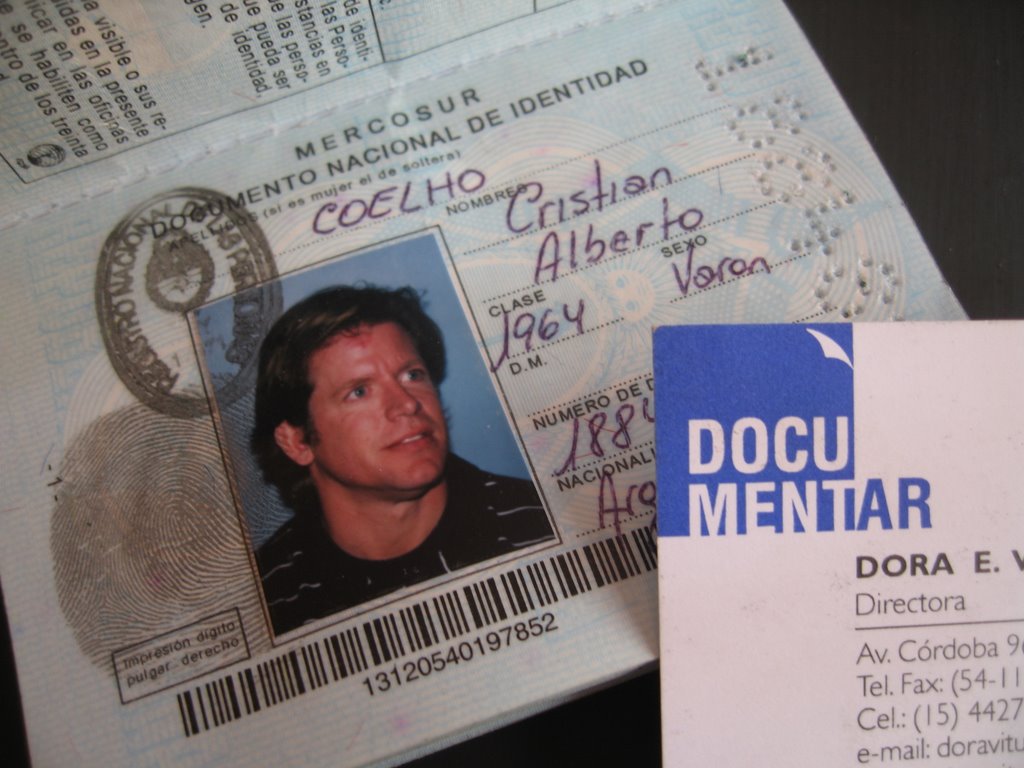
I hand over my birth certificate(registro civil)and an old passport. She considers these and rapidly describes the steps that will have to be taken. I pick up every third or fourth word. She seems to be saying that any official record of my birth is definitely gone goodbye. The only thing we have to work with is that piece of paper. For some reason the passport is useless and she hands it back to me.

Anyone could see after two minutes that Dora kicks butt and gets results. And that's why I'm here. Dora is going to walk me through Argentina's epic bureaucracy. She's the best gestora in town. Think you're smart enough, charming enough, or resilient enough to wade into a Argentine goverment office on your own and come out with whatever important documentation you need? Forget it. Better call old Dora. She knows how to plow through paperwork backlogs, missing files, change in procedure, take a number, closing at 3:00pm, on vacation, that office moved, come back when you have 5 copies of X or the proper forms Y and Z. Dora knows overworked and underpayed functionaries and clerks and works them until they bend to her will.

I go away feeling confident.

But my case is a difficult one and even Dora struggles to make progress. After a few weeks she calls and says to stop by on a Saturday and leave $200 pesos with the guard. He will give me a receipt. I tell this to various people and they all agree that this is coima for someone(a bribe). When I show up on Saturday the guard is out to lunch. I wait for more than an hour while he enjoys his 5-course meal and a siesta. A second-rate modeling school in the building is holding auditions and that keeps things interesting. Finally the guard shows up and starts digging around in his desk for the receipt. He can't find it but I see it there under his nose. The transaction is finally completed.

After a few more weeks I hear from Dora that plan A has apparently failed. Now I am to meet her at the neighborhood civil office in an end-run on the national register. At the civil office we wait for our number to be called. As usual there are no computers to be seen. The woman tells us we're in the wrong place. They debate back and forth. Dora gets her turned around. OK, where are the photographs? We don't have them. We run down the street to a photography studio. It's closed. A sign on the door says check the cafe on the corner. Dora finds him and hauls him back to work against his will. He puts on tango. First things first. He tells a few stories. I'm thoroughly enjoying myself. Dora tries to hurry him along. He finally takes the pictures and we go back. A flurry of stamps and signatures and paperwork. The woman inks up all 10 of my fingers with a huge ink pad and makes 10 prints on a form. They send me to the men's room to wash up. The sink is covered with ink stains.

About a month later we make arrangements to meet at another office. Here I am to get the long awaited DNI. We are at a little known auxiliary branch of a forgotten department of the national register. We are sent up to the 6th floor. Wrong floor. Someone tells us to go down to 5. Someone on 5 tells us to go down to 3. On 3 we are sent through an interior office and out across a courtyard to another building. In this office there are stacks of blank ID cards and handwritten forms. We finally find the office in question and the woman comes out to the hallway to meet us. She asks for a photograph. Dora looks surprised. Luckily I have the last one with me. After a while we are called in. I sign the handwritten ID. The woman sticks the photo in the right place and laminates it. She shakes my hand. That's it. I have Argentine citizenship again.

Back out in the hallway I pay Dora and she gives me her new business card. We say goodbye forever.

Over the last 6 months I've heard her name mentioned repeatedly. I'm surprised to learn that she now has a web site. The site looks good and there is a choice of 4 different languages.
But only the spanish link works.